


Nobody buys a Rolex because it's on sale. They buy it because they can.
That distinction matters more than it sounds. The secondary market for luxury watches has become one of the more telling gauges of how consumers may be feeling.
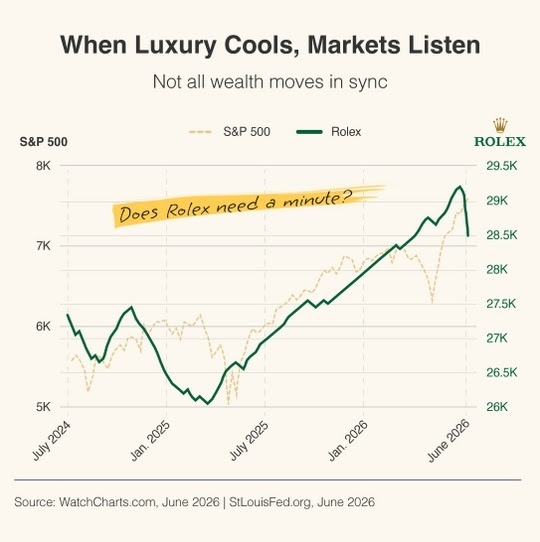
This month's chart tracks the WatchCharts Rolex Market Index alongside the S&P 500 from July 2024 through early June 2026. The relationship between the two lines is curious.1
When Stocks Rise, So Does the Asking Price
The S&P 500 opened the chart window near 5,475 in July 2024 and climbed to roughly 7,600 by early June 2026, a gain of approximately 39 percent. The Rolex line is noticeably smoother. The chart suggests that when the S&P trends higher, the wealthy are inclined to spend on a status purchase.2
Why This Signal Is Worth Watching
The resale market for high-end watches reflects something traditional economic data can be slow to capture: the spending behavior of consumers wealthy enough that luxury is a choice, not a stretch. When that group pulls back, it can signal that uncertainty may be creeping in. When they re-engage, it may suggest the same thing in reverse.
What This Means for You
Markets send signals through channels you wouldn't always think to watch. Part of what we do is pay attention to those non-traditional channels, in addition to the headlines, so your financial goals remain central and supported.
1. WatchCharts.com, June 2026
2. Federal Reserve Bank of St. Louis, FRED, June 2026
The opinions voiced in this material are for general information only and are not intended to provide specific advice or recommendations for any individual. All performance referenced is historical and is no guarantee of future results. All indices are unmanaged and may not be invested into directly.